


You step out of the car and everything looks normal.
The ground is not spinning. You are not about to faint. Still, walking across the parking lot feels slightly strange—as if your body is a half-step behind your head.
Later, your neck tightens. Turning to check traffic feels restricted. By the end of the day, the unsteady feeling is back.
A lot of patients struggle to describe this sensation because it does not feel like classic vertigo. They use words such as floating, swaying, drifting, off-center, or simply, “I don’t feel steady.”
When that sensation repeatedly appears alongside neck pain or stiffness, one possible piece of the puzzle is cervical proprioception.
Can Your Neck Affect Your Balance?
It can in some patients.
Your balance system does not come from the inner ear alone. The brain continually combines information from your eyes, vestibular system, muscles, and joints to work out where your head and body are in space.
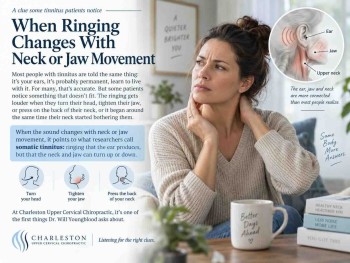
The neck contributes through proprioception—the nervous system’s ability to sense position and movement.
When cervical joints and muscles are painful, injured, or moving abnormally, that sensory information may become less reliable. The result can be a mismatch between what the neck, eyes, and inner ear are telling the brain.
That does not mean every dizzy person has a neck problem. Balance symptoms can also come from inner-ear disorders, migraine, medication effects, cardiovascular problems, neurological conditions, dehydration, and other causes.
The useful question is more specific:
Does your imbalance consistently occur with neck pain, restricted neck movement, or a history of cervical injury?
What Is Cervical Proprioception?
Close your eyes and turn your head slightly to the right. Even without looking in a mirror, you know roughly where your head is positioned.
That seemingly simple ability depends on thousands of sensory messages moving from muscles and joints toward the nervous system.
The upper cervical region—the area surrounding the skull, atlas (C1), and axis (C2)—is particularly important for fine head movement and orientation. Your brain uses this information to coordinate head position with vision and balance.
If the signals become inconsistent, you may not consciously think, “My proprioception is inaccurate.”
You are more likely to think:
“I feel weird when I turn my head.”

Or:
“I’m not dizzy exactly. I just don’t feel steady.”
What Recent Research Says About Neck Pain and Balance
This is one area where newer research has become especially interesting.
A 2024 study published in the Journal of Neurology examined people with chronic or recurring neck pain and compared their balance with healthy controls. Normal standing was not dramatically different between the groups. But when participants rapidly rotated their heads, the neck-pain group became significantly less stable and showed greater body sway.
That finding matters because it resembles what patients often describe in real life. They may feel reasonably steady while sitting still but become uncomfortable while:
- Turning quickly to look behind them
- Walking while moving the head
- Looking between shelves in a store
- Driving and repeatedly checking mirrors
- Moving through visually busy environments
The research does not prove that the cervical spine is responsible for every balance complaint. It does show that head movement can expose balance differences that may not be obvious while someone is standing quietly.
A 2025 Study Adds an Important Reality Check
Research does not all point in one convenient direction.
A 2025 randomized controlled trial studied 45 adults with chronic neck pain. Researchers compared traditional exercise alone with exercise plus cervical mobilization or immersive virtual-reality training. Adding cervical mobilization did notproduce additional improvement in joint-position sense, pain, balance, or function compared with exercise alone.
That is useful information.
It means we should not reduce the problem to, “Move the neck joint and balance will automatically improve.” Chronic neck pain is more complicated than that. Exercise, sensorimotor rehabilitation, underlying pathology, previous injury, and individual neurological responses may all matter.
What About Upper Cervical Manipulation Specifically?
A newer 2026 exploratory randomized controlled trial looked specifically at manipulation of the C1–C2 region in 35 people with chronic primary neck pain.
Researchers measured cervical sensorimotor control by asking participants to guide a head-mounted laser through a movement pattern. The study found an overall improvement in movement accuracy over time, but it did not establish a clear superiority of upper cervical manipulation over sham treatment for the primary accuracy outcome.
Researchers also observed a temporary slowing of head and neck movement after the intervention and emphasized that larger studies and long-term clinical research are still needed.
That distinction is important.
The study is evidence that scientists are actively examining how C1–C2 interventions may influence sensorimotor control. It is not evidence that an upper cervical adjustment cures dizziness or balance disorders.
For patients, that makes accurate evaluation more important—not less.
When Might the Neck Be Worth Investigating?

A cervical contribution becomes more plausible when the story has a recognizable pattern.
For example, a patient may notice that the unsteadiness began after a rear-end collision years ago. The severe neck pain eventually settled, but the neck never quite regained its previous movement.
Or the imbalance appears mainly after hours at a computer and improves as the neck relaxes.
Patterns that may justify a focused cervical assessment include:
- Balance symptoms occurring with neck pain or stiffness
- Symptoms triggered or worsened by head movement
- Reduced ability to turn the neck normally
- A previous whiplash, concussion, fall, sports injury, or other neck trauma
- Headaches or pressure near the base of the skull occurring with the imbalance
None of these confirms that the neck is the cause. They tell the clinician where to investigate.
Vertigo and Feeling Off Balance Are Not Exactly the Same
Patients often use dizziness and vertigo interchangeably, but they describe different experiences.
Vertigo usually involves an illusion of movement—you or the environment feels as though it is spinning or moving.
A cervical sensorimotor complaint may be harder to describe. Instead of spinning, the person may report swaying, instability, poor orientation, or feeling disconnected from the ground.
That distinction matters because treatment depends on the cause.
Inner-ear disorders, vestibular migraine, blood-pressure problems, neurological disease, and cervical dysfunction should not all be treated as the same condition simply because the patient says, “I’m dizzy.”
When Balance Problems Need Immediate Medical Care
New or sudden imbalance deserves particular caution.
The CDC lists sudden dizziness, trouble walking, loss of balance or coordination, new vision problems, one-sided weakness or numbness, speech difficulty, confusion, and a sudden severe headache among possible signs of stroke. These symptoms require emergency evaluation rather than a routine chiropractic appointment.
Seek urgent medical attention when imbalance occurs suddenly with neurological symptoms, following significant trauma, or when it is rapidly worsening.
What Happens During an Upper Cervical Evaluation in Charleston?
Charleston Upper Cervical Chiropractic describes its approach as Corrective Spinal Care focused specifically on the upper cervical region.
Dr. Will Youngblood uses the Knee Chest Upper Cervical technique along with a detailed health history, three-dimensional X-ray analysis, motion studies, and neurological measurements to determine whether a neurostructural abnormality is present.
The correction is designed to be specific rather than a generalized twisting or cracking maneuver, and the office monitors whether the correction is holding instead of automatically adjusting at every visit.

For a patient who feels off balance, the history matters as much as the neck itself.
When did the problem begin?
Was there an accident before it started?
Does turning your head reproduce it?
Is the room spinning, or do you simply feel unsteady?
Are there hearing changes, migraine symptoms, numbness, weakness, fainting, or visual changes?
Those answers can help separate a possible cervical component from symptoms that belong in a medical, neurological, or vestibular evaluation.
Frequently Asked Questions
1. Can C1 or C2 problems make you feel off balance?
The upper cervical region contributes sensory information involved in head position and movement. Dysfunction in the cervical system may contribute to balance or orientation symptoms in some people, but C1 or C2 involvement cannot be diagnosed from symptoms alone.
2. Why do I feel more unsteady when I turn my head?
Head movement requires the visual, vestibular, and cervical sensory systems to coordinate rapidly. A 2024 study found that rapid head rotation increased postural instability in people with chronic neck pain compared with healthy controls.
3. Can an upper cervical adjustment cure dizziness?
Current research does not support promising a cure. A 2026 exploratory trial studied immediate sensorimotor effects of C1–C2 manipulation, but the authors specifically called for larger studies and research into long-term clinical relevance.
4. Should I see an ENT or neurologist first?
If your symptoms involve true spinning vertigo, new hearing loss, significant neurological symptoms, fainting, sudden onset, or unexplained progressive imbalance, medical evaluation is appropriate. An upper cervical evaluation may be considered after serious causes are excluded or when a clear neck component exists.
Upper Cervical and Balance Evaluation in Charleston, SC
Feeling off balance can slowly change how you live.
You stop turning your head quickly. Busy stores become uncomfortable. Driving takes more concentration. You begin walking more cautiously, even though no one looking at you would know anything is wrong.
Sometimes the inner ear is responsible. Sometimes migraine or another medical condition is involved.
And sometimes the neck deserves a closer look.
For Charleston patients whose imbalance appears alongside neck stiffness, restricted motion, headaches, or a history of injury, a focused upper cervical examination can help determine whether cervical mechanics are one part of the problem.
Charleston Upper Cervical Chiropractic
1411 Ashley River Road
Charleston, SC 29407
Phone: (843) 225-5855
The practice serves patients from Charleston, West Ashley, James Island, Johns Island, Mount Pleasant, North Charleston, Summerville, and surrounding Lowcountry communities.
Medical note: Balance problems have many potential causes. Upper cervical chiropractic should not replace appropriate medical, neurological, cardiovascular, or vestibular evaluation when those conditions are suspected.

Leave a comment