

A car accident can last only seconds, but the effects on your neck may continue for weeks or months. Some people walk away from a collision feeling relatively normal, only to develop headaches, neck stiffness, dizziness, or difficulty concentrating later.
Understanding the Upper Cervical Spine Connection After a Car Accident
Why does this happen?
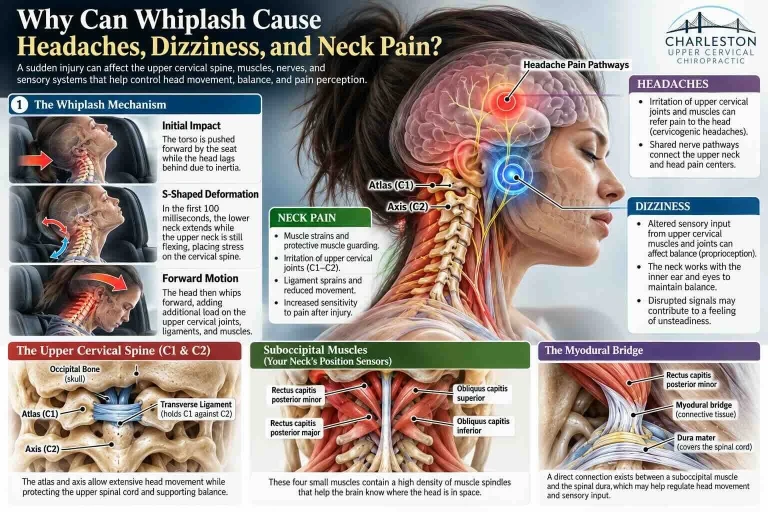
Whiplash involves much more than sore muscles. Sudden acceleration and deceleration can place stress on the joints, ligaments, and muscles of the cervical spine, including the uppermost vertebrae located directly beneath the skull.
These vertebrae, called the atlas (C1) and axis (C2), play important roles in head movement, spinal stability, and the sensory information your brain uses to coordinate posture and balance.
At Charleston Upper Cervical Chiropractic in Charleston, South Carolina, understanding the relationship between upper cervical function and persistent neck-related symptoms is an important part of the practice's clinical approach.
What Happens to Your Neck During Whiplash?
Whiplash commonly occurs during rear-end automobile collisions, although falls, sports injuries, and other sudden impacts can produce similar forces.
When a vehicle is struck from behind, the seat accelerates the torso forward while the head initially lags behind.
The cervical spine may briefly develop an S-shaped configuration as the lower neck extends while the upper neck remains relatively flexed.
This rapid movement can stress cervical joints and surrounding soft tissues.
Possible consequences include:
- Muscle strains and protective muscle tightening
- Irritation of cervical joints
- Ligament sprains
- Changes in neck movement and coordination
- Increased sensitivity to pain
Symptoms may appear immediately or develop over the following days.
Importantly, persistent symptoms do not necessarily indicate permanent damage, vertebral displacement, or spinal instability.
Why Is the Upper Cervical Spine Important After Whiplash?
The upper cervical spine consists of two specialized vertebrae.
C1, the atlas, supports the skull and contributes to nodding movements.
C2, the axis, provides an important pivot for head rotation.
Together, these structures allow substantial movement while protecting the upper spinal cord.
The upper cervical region also contains small muscles and joints that provide the nervous system with information about head position.

Following a whiplash injury, pain, muscle guarding, and altered cervical movement may affect how this sensory information is processed.
This is one reason upper cervical function can be relevant when evaluating persistent symptoms after a collision.
However, symptoms alone cannot establish that C1 or C2 is misaligned. A clinical examination is necessary to determine the possible source of discomfort.
How Can Whiplash Cause Headaches?
One possible explanation is a cervicogenic headache, meaning a headache associated with a disorder or dysfunction involving structures in the neck.
The upper cervical joints and muscles share neurological pathways with regions involved in head pain perception.
This relationship helps explain why discomfort originating in the neck can sometimes be experienced in the head.
Cervicogenic headaches may involve:
- Pain beginning near the base of the skull
- Discomfort extending toward the forehead or temples
- Headaches associated with neck movement
- Reduced cervical range of motion
- Tenderness in the upper neck
Following whiplash, muscle tension and cervical joint irritation may contribute to these symptoms.
Nevertheless, not every headache after a car accident is cervicogenic.
Concussion, migraine, medication effects, and other medical conditions may also produce headaches.
A careful evaluation is necessary, particularly when headaches are new, severe, or progressively worsening.
Why Does Whiplash Sometimes Cause Dizziness?
Your body's balance system relies on information from three major sources:
- The vestibular system in the inner ear
- The visual system
- Proprioceptive receptors in muscles and joints
The upper cervical spine contributes to the third system.
Small muscles beneath the skull, called the suboccipital muscles, contain numerous sensory receptors known as muscle spindles.
These receptors help the brain understand the position and movement of the head relative to the body.
After a neck injury, altered cervical sensory input may contribute to a sensation of unsteadiness in some individuals.
This proposed mechanism is associated with cervicogenic dizziness.
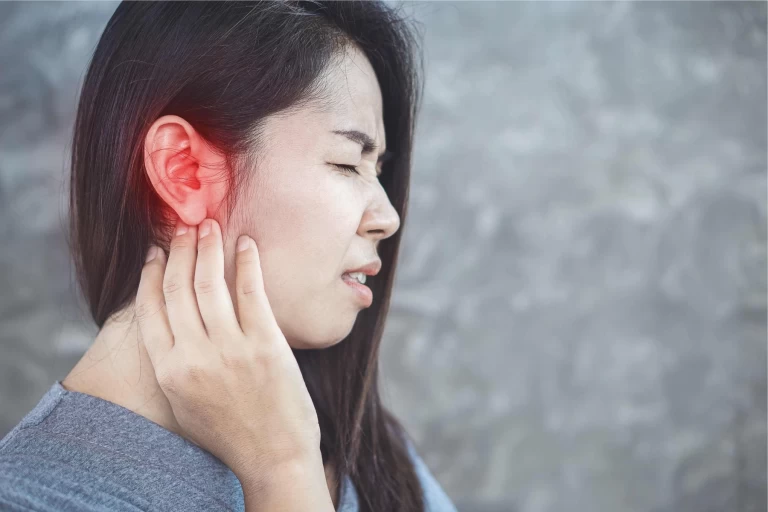
However, cervicogenic dizziness is a diagnosis considered only after other possible causes have been evaluated.
Dizziness following a collision can also result from concussion, inner-ear disorders, vestibular dysfunction, and other medical problems.
Upper cervical chiropractic care should not replace the medical assessment needed to identify these causes.
Why Can Neck Pain Continue After the Accident?
Neck pain after whiplash may persist for several reasons.
Muscles can remain guarded, cervical joints may become sensitive, and reduced movement can contribute to stiffness.
Some individuals also develop changes in pain processing, meaning the nervous system becomes more sensitive to movement or pressure.
Persistent pain does not always mean that tissues remain injured.
Recovery is influenced by several factors, including the severity of symptoms, physical activity, sleep, stress, and previous neck problems.
For many people, gradually restoring comfortable movement is an important part of rehabilitation.
Can Upper Cervical Chiropractic Care Help After Whiplash?
Upper cervical chiropractic care focuses on evaluating the relationship between the head and the uppermost cervical vertebrae.
At Charleston Upper Cervical Chiropractic, Dr. William M. Youngblood Jr. emphasizes individualized evaluation of the upper cervical spine and its relationship to overall spinal function.
Following appropriate medical assessment and clearance, chiropractic care may be considered for certain musculoskeletal symptoms associated with whiplash.
A clinical evaluation may include:
- Reviewing accident history and symptoms
- Assessing cervical movement and tenderness
- Examining posture and functional limitations
- Screening for neurological warning signs
- Determining whether additional medical evaluation or imaging is needed
The goal is to identify whether conservative upper cervical care is appropriate for the patient's presentation.
Research supports multimodal management of many whiplash-associated disorders, including education, appropriate exercise, and selected manual therapies.
However, studies have not established that upper cervical adjustments alone reliably resolve whiplash-related dizziness, repair damaged ligaments, or correct all post-traumatic headaches.
Individual treatment decisions should be guided by clinical findings and safety considerations.
Why Consider an Upper Cervical Chiropractor in Charleston, SC?

Not every patient recovering from whiplash has the same symptoms or clinical needs.
Some primarily experience muscle stiffness. Others report persistent headaches or difficulty turning their heads.
An upper cervical chiropractor offers a focused assessment of the atlas, axis, and surrounding cervical structures as one component of evaluating neck-related complaints.
Charleston Upper Cervical Chiropractic provides this specialized focus for patients in Charleston and surrounding communities, including West Ashley, Mount Pleasant, North Charleston, James Island, and Summerville.
For anyone experiencing symptoms following a car accident, the essential first step is determining whether a serious injury has been excluded and which conservative treatments are appropriate.
Frequently Asked Questions About Whiplash and Upper Cervical Care
Can whiplash affect the C1 and C2 vertebrae?
Yes. Whiplash can place mechanical stress on the upper cervical joints and surrounding soft tissues. However, symptoms do not automatically indicate structural displacement or ligament damage.
Can whiplash cause headaches without visible injury on an MRI?
Yes. Headaches and neck pain can occur even when routine imaging does not identify a significant structural abnormality.
Can neck problems cause dizziness after a car accident?
Altered cervical proprioception may contribute to dizziness, but concussion, vestibular disorders, and other medical causes must be considered first.
How soon should I see a chiropractor after whiplash?
Seek medical assessment promptly after significant trauma, especially when symptoms are severe or unusual. Chiropractic treatment should begin only when serious injuries and contraindications have been appropriately addressed.
What symptoms require emergency medical attention?
Seek emergency care for severe or worsening headaches, new weakness or numbness, difficulty walking, fainting, vision or speech changes, or severe neck pain after trauma.
Take the Next Step Toward Understanding Your Neck Pain
Whiplash can affect more than the large muscles of the neck.
The upper cervical joints, stabilizing tissues, and sensory receptors all contribute to normal head movement and cervical function.
For some patients, these structures may be involved in persistent headaches, neck stiffness, and movement-related discomfort.
Understanding the source of your symptoms is essential to selecting an appropriate recovery plan.
Charleston Upper Cervical Chiropractic offers upper cervical consultations for patients seeking an individualized assessment of neck-related concerns.
Charleston Upper Cervical Chiropractic
Dr. William M. Youngblood Jr.
1411 Ashley River Road
Charleston, SC 29407
Phone: (843) 225-5855
Schedule a consultation to discuss your symptoms and whether upper cervical chiropractic care may be appropriate for you.
Disclaimer: This information is educational and does not replace medical diagnosis, emergency assessment, or individualized treatment recommendations.
References
Clinical Practice Guideline for Neck Pain and Whiplash-Associated Disorders
Clinical Practice Guideline for Headaches-Associated With Neck Pain
Cervical Sprain and Whiplash — NCBI Bookshelf

Leave a comment