


Have you ever stood up and suddenly felt unsteady? Perhaps the room seemed to spin, your balance felt unreliable, or walking in a straight line became unexpectedly difficult.
Balance problems can interfere with everyday activities, including driving, exercising, working, and walking confidently.
While many people associate dizziness and balance disorders with the inner ear, the body's balance system also depends on information from the eyes, muscles, joints, and nervous system.
One area involved in this process is the upper cervical spine, located directly beneath the skull.
At Charleston Upper Cervical Chiropractic, Dr. Will Youngblood focuses on evaluating upper cervical spine function as part of his specialized chiropractic approach.
Understanding how the neck contributes to balance may help explain why some individuals experience dizziness alongside neck pain or stiffness.
What Are Balance-Related Conditions?
Balance disorders occur when the body's systems responsible for maintaining stability do not function together effectively.
Symptoms can include:
Dizziness or lightheadedness
Feeling unsteady while walking
A spinning sensation known as vertigo
Difficulty maintaining balance
Nausea associated with movement
Feeling as though the body is swaying
Discomfort when turning the head
Some people experience occasional symptoms, while others struggle with persistent imbalance that significantly affects daily life.
Balance problems have many possible causes, including inner ear disorders, medication effects, migraines, neurological conditions, and blood pressure changes.
Therefore, determining the underlying cause is essential before selecting treatment.
How Does the Body Maintain Balance?
Your brain continuously receives information from three primary sensory systems.
1. The Vestibular System
Located in the inner ear, the vestibular system detects head movement and changes in position.
It helps your brain understand whether you are turning, tilting, accelerating, or standing still.
2. The Visual System
Your eyes provide information about your surroundings and help you maintain orientation while moving.
3. The Proprioceptive System
Proprioceptors are specialized sensory receptors in muscles, tendons, and joints.
They communicate information about body position and movement to the central nervous system.

The neck contains proprioceptors that help your brain recognize the position of your head relative to the rest of your body.
When information from these systems does not coordinate properly, dizziness or imbalance may occur.
What Is the Connection Between the Upper Cervical Spine and Balance?
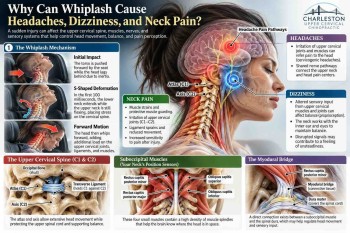
The upper cervical spine includes the atlas (C1) and axis (C2), the first two vertebrae supporting the skull.
These structures provide essential movement and stability while allowing the head to rotate and tilt.
The upper neck also contains muscles and joints that contribute sensory information to the brain.
When cervical joint movement or muscular function is disturbed, proprioceptive signals may become less reliable.
Researchers have investigated whether abnormal cervical sensory input contributes to certain forms of dizziness.
This proposed mechanism is particularly relevant to a condition called cervicogenic dizziness.
However, not all dizziness originates in the neck, and a suspected atlas misalignment cannot independently establish the cause of a balance disorder.
What Is Cervicogenic Dizziness?
Cervicogenic dizziness refers to dizziness potentially associated with cervical spine dysfunction.
People with this condition frequently experience neck discomfort alongside sensations of unsteadiness or disorientation.
Symptoms may become more noticeable during certain neck movements.
Possible features include:
Dizziness associated with neck pain
Cervical stiffness
Reduced neck mobility
Unsteadiness during head movements
Headaches accompanying neck discomfort
Unlike some inner ear disorders, cervicogenic dizziness often produces sensations of imbalance rather than distinct episodes of spinning vertigo.
Nevertheless, symptoms overlap with many other conditions.
Cervicogenic dizziness is generally considered a diagnosis of exclusion, meaning other causes must be investigated before attributing symptoms to the neck.

Can Upper Cervical Chiropractic Help Balance Problems?
Upper cervical chiropractic is a specialized form of chiropractic care focused on the relationship between the uppermost cervical vertebrae and surrounding musculoskeletal structures.
At Charleston Upper Cervical Chiropractic, the focus is on assessing upper cervical mechanics and identifying whether cervical dysfunction may be contributing to a patient's symptoms.
For individuals with neck-related dizziness, appropriate conservative treatment may help address cervical discomfort and mobility restrictions.
A 2025 systematic review found that manual therapy targeting the upper cervical spine may reduce dizziness intensity and its impact on daily activities in certain patients.
However, the certainty of the evidence was low to very low, and more rigorous research is needed.
Importantly, this does not establish that chiropractic adjustments treat all types of vertigo or balance disorders.
For conditions originating in the inner ear, specialized vestibular treatment may be more appropriate.
How Does Charleston Upper Cervical Chiropractic Approach Balance Concerns?
Dr. Will Youngblood provides specialized upper cervical care using a corrective spinal approach.
The process begins by reviewing the patient's symptoms, health history, and previous injuries.
Step 1: Detailed Consultation
The evaluation considers when dizziness began, what triggers symptoms, and whether neck pain or previous trauma may be relevant.
Step 2: Upper Cervical Examination
The chiropractor evaluates relevant spinal and postural findings to determine whether cervical musculoskeletal dysfunction may be present.
Step 3: Diagnostic Assessment
The clinic's published approach includes upper cervical imaging, motion assessment, and neurological measurements when considered appropriate.
These assessments do not replace medical or vestibular testing for dizziness.
Step 4: Individualized Chiropractic Care
If upper cervical treatment is appropriate, Dr. Youngblood develops recommendations based on the examination findings.
The practice uses a specific upper cervical adjustment approach rather than routine generalized neck manipulation.
Treatment responses should be monitored through meaningful changes in comfort, movement, and daily function.
When Is Chiropractic Care Not the Right First Step?
Dizziness and balance problems sometimes indicate conditions requiring medical attention.

Seek emergency care for sudden dizziness accompanied by weakness, difficulty speaking, double vision, severe headache, chest pain, or inability to walk normally.
New, persistent, or unexplained dizziness should also be evaluated by a healthcare professional.
For example, benign paroxysmal positional vertigo (BPPV), a common inner ear condition, is generally treated with specific canalith repositioning maneuvers.
Vestibular rehabilitation may also help people with certain balance disorders.
Chiropractic care should not delay appropriate medical diagnosis or established treatment.
Frequently Asked Questions About Balance and Upper Cervical Chiropractic
Can neck problems cause dizziness?
Neck dysfunction may contribute to dizziness in certain individuals, particularly when neck pain and dizziness occur together. However, other causes must be evaluated first.
Can atlas misalignment affect balance?
The upper cervical region contributes sensory information used for balance. However, research has not established that atlas misalignment is a common cause of balance disorders.
Can upper cervical chiropractic help vertigo?
Some patients with neck-related dizziness may benefit from appropriate cervical manual therapy. However, upper cervical chiropractic is not an established treatment for every type of vertigo.
How do I know if dizziness comes from my neck?
A professional evaluation considers symptom patterns, cervical findings, vestibular testing, and other medical causes. There is no single chiropractic examination that definitively diagnoses cervicogenic dizziness.
Where can I find an upper cervical chiropractor in Charleston, SC?
Charleston Upper Cervical Chiropractic provides specialized upper cervical evaluations at 1411 Ashley River Road in Charleston, South Carolina.
Explore Upper Cervical Chiropractic Care in Charleston, SC
Living with persistent dizziness or balance difficulties can affect your confidence, independence, and quality of life.
At Charleston Upper Cervical Chiropractic, Dr. Will Youngblood offers individualized upper cervical assessments for patients interested in exploring whether cervical spine dysfunction may contribute to their symptoms.
The practice serves Charleston, West Ashley, North Charleston, Mount Pleasant, James Island, Johns Island, and surrounding South Carolina communities.
If you experience dizziness alongside recurring neck discomfort, contact the office to discuss whether an upper cervical evaluation may be appropriate after other important causes have been considered.
Schedule your consultation today.
Charleston Upper Cervical Chiropractic
Dr. Will Youngblood
1411 Ashley River Road
Charleston, SC 29407
Phone: (843) 225-5855
Website: https://charlestonuc.com
Appointments: https://charlestonuc.com/appointments
Medical disclaimer: This information is educational and does not replace medical evaluation, diagnosis, or treatment. Upper cervical chiropractic care is not an established treatment for all balance or vestibular disorders.

Leave a comment