

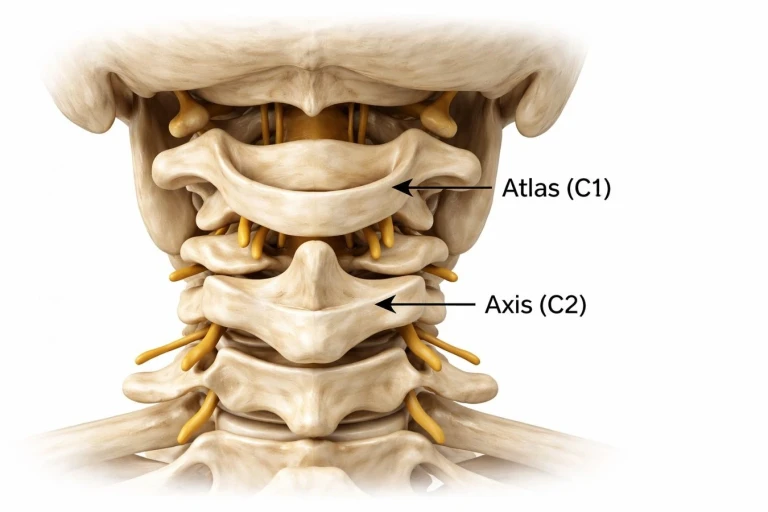
The top of the spine does not function like the rest of the spine. The first two vertebrae, called the atlas and axis, are uniquely designed to support the head, protect the brainstem region, and allow a high degree of movement.
In upper cervical chiropractic, these two vertebrae receive special attention because even small changes in their alignment can influence comfort, posture, mobility, and nervous system function.
For patients searching for answers to chronic neck tension, headaches, dizziness, or a feeling that their body is constantly compensating, understanding the role of the upper cervical spine can be an important first step. This area is small, but its influence can be significant.
What are the first two vertebrae?
The first cervical vertebra is the atlas, named after the mythological figure who held the world on his shoulders. Its job is to support the skull. The second is the axis, which helps the head rotate from side to side. Together, these vertebrae create the foundation for head movement and help connect the skull to the rest of the spine.
Unlike other vertebrae, the atlas and axis have a different shape and function. They are built more for mobility and precision than for weight-bearing strength. This unique anatomy is one reason upper cervical chiropractors focus so closely on them.
Because the head weighs several pounds and rests directly on this area, any imbalance at the top of the neck can influence how the rest of the spine and body respond. When the head is not centered well over the spine, muscles, joints, and posture can begin to compensate.
Why this area matters so much
The upper cervical spine is important for several reasons:
1. It supports the head
The atlas carries the weight of the head all day long. If that support is off balance, the body may adapt by tightening muscles, shifting posture, or changing movement patterns. Over time, that can contribute to strain not only in the neck, but also in the shoulders, mid-back, and lower spine.
2. It allows major movement
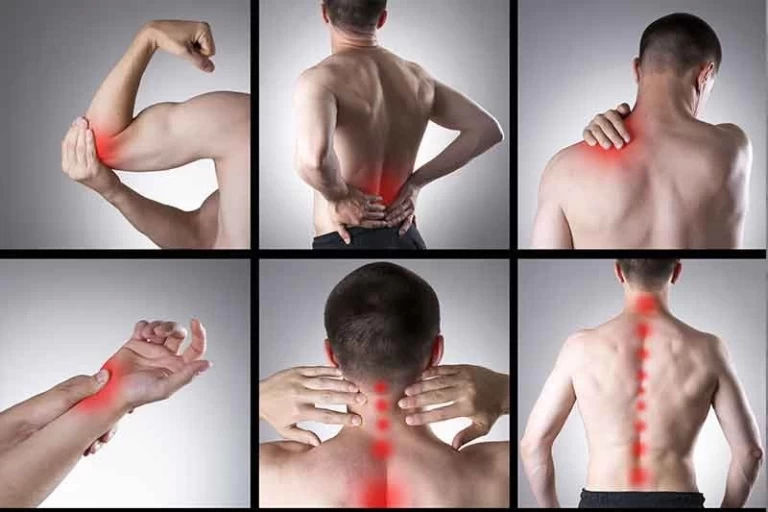
A large percentage of head rotation and nodding happens at the atlas and axis. That means these vertebrae are involved in many of the movements people use constantly, including turning the head while driving, looking down at a phone, or working at a desk. If motion in this area becomes restricted or uneven, people may notice stiffness, tension, or recurring discomfort.
3. It sits close to vital neurological structures
The upper cervical region surrounds and protects part of the central nervous system. Because of that close relationship, upper cervical chiropractors pay close attention to how structure and alignment may affect function. Their goal is not simply to reduce pain, but to improve balance and reduce irritation in a highly important area of the body.
4. It influences whole-body compensation
When the top of the spine is not functioning well, the body often adapts below it. A subtle imbalance near the skull can lead to changes in shoulder height, head tilt, muscle tension, or spinal compensation patterns further down. Patients are often surprised to learn that a long-standing issue in posture or comfort may have a connection to the upper neck.
Common problems linked to the upper cervical spine
People do not always realize how many symptoms may involve the upper cervical region. While every case is different, this area is often evaluated in patients dealing with:
- Recurring headaches
- Neck pain and stiffness
- Migraines
- Dizziness or balance issues
- Tension at the base of the skull
- Reduced range of motion
- Postural imbalance
- Discomfort after an accident or fall
Upper cervical chiropractic does not claim that every symptom starts in the atlas or axis. What it does recognize is that this region deserves careful assessment because of how central it is to head position, movement, and neurological relationship.
Why small misalignments can create bigger effects
One of the defining ideas in upper cervical chiropractic is that small misalignments in the upper neck can matter more than people think. That is because this area is so compact, so mobile, and so closely tied to the skull and nervous system.

A small shift at the lower back may not affect the body the same way a small imbalance under the skull can. Since the atlas and axis help orient the head, even subtle changes may alter posture and muscular tone throughout the body. This can create a chain reaction of compensation.
That is also why upper cervical care is typically very specific. The goal is not forceful twisting or repeated general adjustments. Instead, the focus is on detailed analysis and precise correction based on the patient’s individual structure.
How upper cervical chiropractic is different
Upper cervical chiropractic is a specialized approach that focuses primarily on the relationship between the skull, atlas, and axis. Rather than adjusting many areas of the spine in a broad way, the doctor carefully studies this upper region to determine whether a precise correction is needed.
This often includes:
- Detailed history and symptom review
- Postural and structural evaluation
- Precise imaging when needed
- Specific analysis of the upper cervical spine
- Gentle, targeted adjustments
Many upper cervical chiropractors use advanced imaging and analysis to understand the patient’s anatomy before making any correction. This matters because no two people have the exact same structural patterns. Precision helps make care more individualized.
Who may benefit from having this area evaluated?
A focused upper cervical evaluation may be especially helpful for people who:
- Have recurring head or neck issues
- Feel they are always “out of balance”
- Have lingering symptoms after a car accident
- Have tried other forms of care without lasting improvement
- Notice one-sided tension patterns
- Experience headaches that seem to start in the neck
- Want a more precise and gentle chiropractic approach

Patients often seek upper cervical care because they want to understand the cause of recurring problems, not just manage symptoms temporarily.
The importance of precise assessment
Because the atlas and axis are so specialized, they should not be approached casually. A careful upper cervical chiropractor pays close attention to how these vertebrae are positioned and functioning before deciding on treatment.
That precision matters for two reasons. First, it helps the doctor avoid guessing. Second, it makes care more patient-specific. When the first two vertebrae receive special attention, the goal is not more treatment. The goal is better-focused treatment.
In many practices, this emphasis on accuracy is part of what sets upper cervical care apart. Patients often appreciate that the process feels thoughtful, measured, and customized to their structure rather than routine or generic.
Why this topic matters for patients today
Modern habits place constant stress on the upper cervical spine. Long hours on devices, desk work, poor posture, old injuries, and high daily stress can all affect how the head and neck carry load. Many people live with chronic tension without realizing how much their upper neck may be involved.
That does not mean every person needs upper cervical care. It does mean the first two vertebrae should not be overlooked, especially when symptoms are persistent, unexplained, or tied to head position and neck tension.
Final thoughts
The first two vertebrae deserve special attention because they are not ordinary spinal segments. The atlas and axis support the head, guide movement, and sit in one of the most important structural areas of the body. When they are not functioning well, the body may compensate in ways that affect comfort, posture, and daily life.
Upper cervical chiropractic focuses on this region with a level of specificity that many patients find valuable. For those dealing with headaches, neck tension, dizziness, or chronic postural imbalance, looking closely at the upper cervical spine may help reveal a piece of the puzzle that has been missed.
When care begins with the right focus, small corrections can sometimes make a meaningful difference.


Leave a comment