

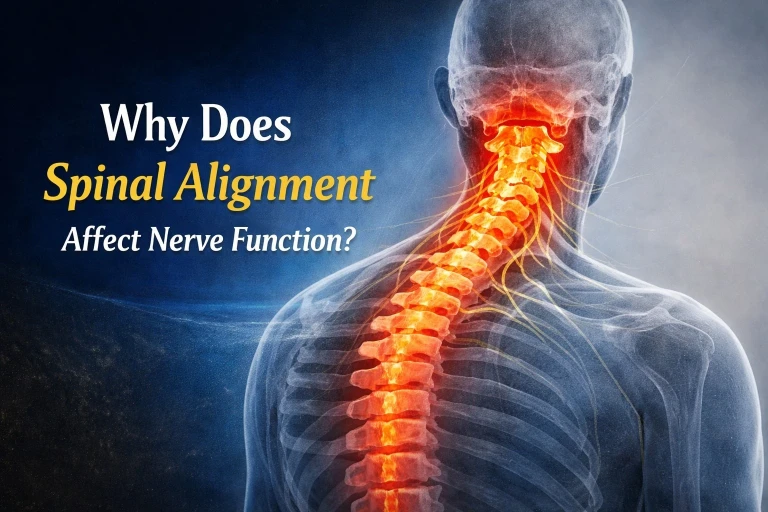
Spinal alignment matters because the spine is more than a stack of bones. It is the structural housing for the nervous system, the communication network that helps coordinate movement, sensation, balance, muscle tone, and countless automatic functions throughout the body.
When spinal alignment changes, the way the body loads joints, muscles, connective tissue, and nerves can change with it.
In upper cervical chiropractic, this relationship is especially important because the top of the neck helps support the head, protect the brainstem region, and influence overall postural balance.
For people searching for natural ways to improve comfort, mobility, and neurological function, this connection between spinal alignment and nerve function is one of the most important concepts to understand.
The Spine and Nervous System Work Together
The spine provides structure, protection, and movement. The nervous system provides control, coordination, and communication. These two systems are constantly working together.
The brain sends signals down the spinal cord and through nerves to muscles, organs, and tissues. At the same time, the body sends information back to the brain about posture, movement, tension, pain, and position in space.
This constant exchange helps the body adapt and function efficiently.
When spinal joints are moving well and supporting balanced posture, this communication tends to be more efficient. When alignment is altered and mechanical stress builds, the body may begin to compensate.
Muscles tighten, joints lose normal motion, and surrounding tissues may become irritated. Over time, that can affect the quality of signals traveling through the nervous system.
This is one reason many patients with spinal issues do not just report local discomfort. They may also notice tension, headaches, reduced range of motion, poor balance, fatigue, or a general sense that the body is not functioning as smoothly as it should.
Why Alignment Matters Mechanically
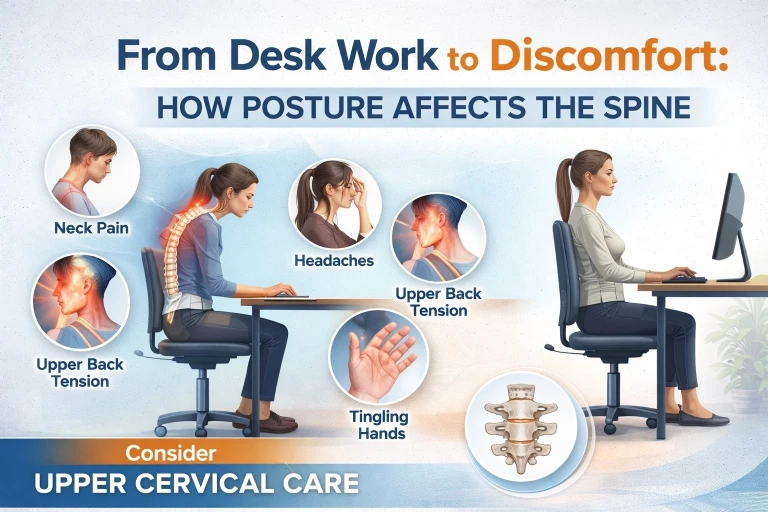
Spinal alignment affects how weight is distributed through the body. If the head shifts forward, the shoulders round, or the upper neck loses its ideal relationship, the muscles and joints below must compensate. The body is incredibly adaptable, but compensation comes at a cost.
When the spine is under uneven stress, several things can happen:

- Muscles may stay in a guarded state
- Joints may lose normal motion
- Ligaments and connective tissues may become strained
- Local inflammation may increase
- Nerve-rich tissues may become more sensitive
This does not always mean a nerve is being severely compressed. In many cases, the issue is more subtle.
Abnormal joint motion, chronic tension, and altered posture can create an environment where the nervous system is constantly reacting to stress. That can influence how the body feels, moves, and responds.
The Upper Cervical Spine Has a Unique Role
The upper cervical spine, especially the atlas and axis, is structurally unique. These top two vertebrae support the head and allow for a significant amount of rotation and fine movement.
They also sit in a region where precise alignment matters because of the close relationship between the skull, spine, surrounding soft tissues, and the central nervous system.
Even small changes in this area can have broad mechanical effects. If the head is not balanced well over the neck, the body often compensates all the way down the spine.
One shift at the top can contribute to altered posture through the shoulders, mid-back, pelvis, and beyond.
Upper cervical chiropractic focuses on this region because it plays such an important role in postural control and neurological balance.
Rather than using a generalized approach, upper cervical care emphasizes precision, careful analysis, and gentle correction designed to reduce structural stress.
How Poor Alignment Can Influence Nerve Function
When people hear the phrase nerve function, they often think only of pinched nerves. That can happen in some cases, but nerve function is broader than that.
The nervous system depends on clear input and output. It needs accurate information from joints, muscles, and position-sensing receptors throughout the spine.

When alignment is off, the body may receive distorted mechanical input. That can affect proprioception, which is the body’s sense of position and movement. It can also affect coordination between muscles, joint stability, and postural reflexes.
Here is another way to think about it: the spine is not just protecting nerves, it is also constantly feeding the brain information.
If the joints of the neck and spine are under stress, the quality of that information may be altered. The result can be a body that feels tense, imbalanced, restricted, or overworked.
This helps explain why spinal issues can show up as more than pain. They may also influence how someone holds themselves, how they recover from stress, and how efficiently they move through daily life.
Common Symptoms People Notice
When spinal alignment affects nerve-related function, symptoms can vary from person to person. Some of the most common include:
- Neck tension or stiffness
- Headaches
- Reduced range of motion
- Shoulder tightness
- Dizziness or imbalance
- Postural fatigue
- Muscle guarding
- Mid-back or low back compensation patterns
In upper cervical chiropractic, the goal is not simply to chase symptoms. It is to look at the structural and neurological relationship behind them. When the upper cervical spine is assessed carefully, it may reveal why the body has been compensating in the first place.
Why Precision Matters in Upper Cervical Chiropractic
Upper cervical chiropractic differs from more generalized approaches because it focuses on the alignment and mechanics of the top of the neck with a high level of specificity.
The correction is usually gentle and based on objective findings rather than force alone.
This matters because the upper cervical region is not an area where guesswork makes sense. Precision helps reduce unnecessary movement, improve consistency, and support a more individualized care plan.
For patients, this often means a calmer experience and a clearer understanding of what is being addressed.
The focus is on restoring better balance at the top of the spine so the body can reduce compensation patterns and function more efficiently overall.
The Goal Is Better Communication, Not Just Better Posture
Good spinal alignment is not about standing perfectly straight for appearance alone. It is about supporting better function.
When the spine is balanced, the muscles do not have to work as hard to hold the body upright.
The joints tend to move more normally. Mechanical stress may decrease. The nervous system can operate in a less reactive environment.
That is why many people seeking upper cervical chiropractic are interested in more than temporary relief.
They want to understand whether structural imbalance may be contributing to recurring problems and whether a more precise approach could help them function better over time.
Final Thoughts
So, why does spinal alignment affect nerve function? Because the spine and nervous system are deeply connected.
Alignment influences posture, movement, tension, joint mechanics, and the quality of information traveling between the body and brain. When that system is under stress, function can become less efficient.
From an upper cervical chiropractic perspective, the top of the neck deserves special attention because of its role in supporting the head, influencing posture, and helping the nervous system operate in a more balanced way.
By focusing on precision and structural integrity, upper cervical care aims to reduce interference, improve stability, and support the body’s natural ability to function well.
Patients looking for chiropractic care in Charleston are often searching for more than short-term symptom relief. Many want answers, clarity, and a better understanding of why their discomfort keeps returning.
At Charleston Upper Cervical Chiropractic, the focus is placed on precise upper cervical care and the structural relationship between the top of the spine and the nervous system. This specialized approach is designed for individuals who want a careful, targeted evaluation rather than a generalized approach to spinal care.
Under the leadership of Dr. Will Youngblood, patients receive care shaped by advanced training, teaching experience, and certification in the Knee Chest technique. His work is centered on precision, clinical detail, and helping patients better understand how upper cervical alignment may be influencing their overall function and well-being.
For those exploring upper cervical chiropractic in Charleston, scheduling a consultation is an opportunity to receive a personalized assessment and determine whether this focused approach is the right fit for their health goals.
Leave a comment